
- Information was never the problem
- I didn’t need a tutorial, I needed a coach
- The Tutor I couldn’t build two decades ago
- My kids are already growing up with this way of learning
- When learning compounds
- The trade-offs
A few years ago, I tried to learn the Rubik’s cube the way most people do: I found a PDF of algorithms, watched a handful of YouTube videos, and spent a lot of time pausing, rewinding and trying to reproduce what I had just seen. I could usually get through the first layer, but everything after that was unreliable. I would get stuck somewhere around F2L or the last layer, try to figure out what I had done wrong, and eventually give up. The frustrating part was that the information was all there. The algorithms weren’t a secret and there were countless tutorials explaining exactly what I was supposed to do, but none of them knew what I already understood, what I kept getting wrong, which explanation made sense to me, or when I simply needed more practice. Every time I came back to the cube, I was essentially starting from the same place because the guide had no memory of my previous attempts or any understanding of how I was learning.
Last month, I picked up the cube again, but this time I approached it differently. I solved it, then moved on to a Pyraminx, and eventually a Megaminx, each becoming easier as I built on what I had learned before. The algorithms hadn’t changed and there wasn’t suddenly more information available than there had been the first time I tried. What had changed was the learning experience itself. Instead of following a fixed guide, I was working with something that could see where I was struggling, change the way it explained a concept, adjust the pace, and remember what had happened in previous sessions. For the first time, I wasn’t simply trying to learn from a resource; I was learning with something that could learn me.
Information was never the problem
The more I think about that experience, the more I realize that information was never the scarce resource. For almost anything I have wanted to learn, there has probably been more information available than I could possibly consume: books, courses, YouTube videos, documentation, forums and now AI systems that can explain almost anything on demand. The problem is that information by itself doesn’t know what to do with the person consuming it. A textbook can explain F2L perfectly well, but it cannot tell that I understood the basic idea and was repeatedly making the same mistake when trying to pair a particular corner and edge. A video can demonstrate an algorithm a hundred times, but it cannot notice that I need to understand the spatial relationship between the pieces before the sequence of moves will make sense to me.
This reminds me of something my professor, Dr. R. Nadarajan, used to say. When a student couldn’t answer a question, he would tell us that it was not necessarily a retrieval problem, but a storage problem. If the student couldn’t retrieve the answer, perhaps the information had not been stored correctly in the first place. I have come back to that idea many times since, because it captures something fundamental about teaching: the responsibility isn’t simply to provide information, but to make sure it gets stored in a way that the learner can actually use later. A good teacher does this almost instinctively. They notice when a student is confused, change the explanation, slow down, skip something that has already been mastered, or introduce a harder problem when the student is ready. A fixed resource cannot do any of this because it was designed before it met the learner. Learning is therefore not really an information problem. It is a feedback problem, where what the learner does next should depend on what happened in the previous attempt.
I didn’t need a tutorial, I needed a coach
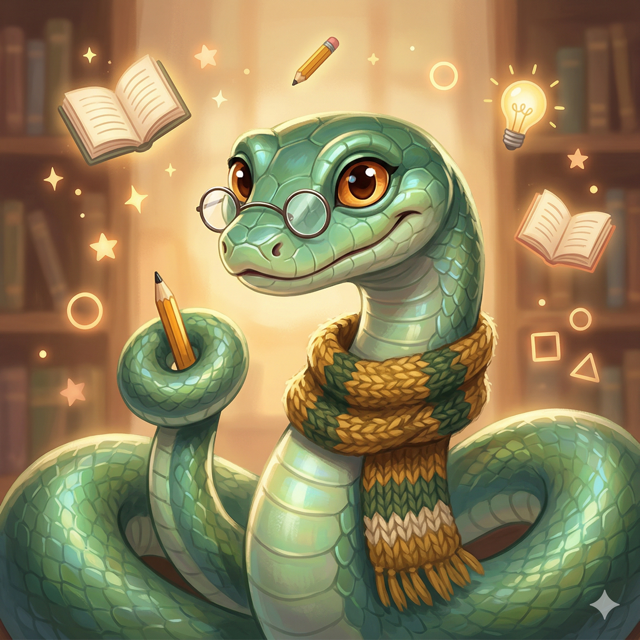
The real change came when I stopped treating AI as a source of answers and started using it as a learning coach. I have been experimenting with an organization of AI agents that I call Knot, where different agents have different personas and responsibilities. One of them, Vine Snake, became my personal learning coach. Instead of asking it to simply explain how to solve a Rubik’s cube, I could tell it what I already knew, where I was getting stuck, and what I was trying to understand. If one explanation didn’t work, it could try another; if I was struggling with F2L, it stayed with F2L instead of moving ahead. If I was progressing quickly, it moved on. The learning process became a conversation rather than a sequence of instructions.
That changed the pace as well. The Rubik’s cube took most of the week, the Pyraminx took much less time because I could build on what I had already learned (in fact Pyraminx is much easier), and the Megaminx was easier still because I could recognize which parts were familiar and focus only on what was different. The coach wasn’t simply giving me the next piece of information; it was helping me figure out what I needed to learn next.
The Tutor I couldn’t build two decades ago
There is a slightly strange feeling to what I am building today because I have been thinking about this problem for almost two decades. As a student at PSG Tech, I worked on intelligent tutoring systems that tried to model what a student knew and use that model to decide what the student should learn next. In 2007, I published papers on Bayesian student modeling and on BiTutor, a component-based intelligent tutoring system that used Bayesian reasoning to make tutoring decisions. The idea was remarkably similar to what I am trying to do today: instead of giving every student the same questions and the same learning path, build a model of the learner and use it to personalize what happens next.
The difference is that our student model had to be explicitly designed. We had to define the knowledge being taught, represent different levels of mastery, track what a student knew, and build rules for deciding which question or concept should come next. It was possible, but it took a lot of engineering and worked within a narrowly defined domain. With today’s AI agents, the model of the learner can be much richer. An agent can remember previous conversations, understand free-form responses, recognize patterns in how someone learns, and carry that understanding into future sessions. Long-term memory is what makes this particularly powerful. Vine Snake doesn’t just adapt to me while we are working together; it can remember what it learned about me and use that knowledge the next time we interact. In effect, the carefully constructed student model I was trying to build two decades ago can now emerge naturally from an ongoing relationship between the learner and the AI.
My kids are already growing up with this way of learning
My children are growing up with AI as part of how they learn, something I never had growing up. My son, Adhiyan, already uses ChatGPT regularly when he needs help with assignments, and I encourage him to use it not just to get an answer but to understand something he is curious about. My daughter, Aganvee, is beginning to use AI in much the same way. As part of Knot, I have set up learning mentors for both of them, Copperhead for Adhiyan and Mamba for Aganvee, which they can access through Slack. These aren’t meant to replace their teachers or become another homework tool; they are persistent learning companions that can get to know each child over time.
The difference becomes especially visible when I use AI with Adhiyan for mathematics. I have scraped the content of his textbooks and made that material available to his learning mentor, so the questions it generates are grounded in what he is actually expected to learn. I prepare questions using the agent for him to work through and feed his answers back into the system. (Sample worksheet) The agent can look at what he got right and wrong, identify the concepts he appears to have mastered and the ones where he needs more practice, and use that feedback to prepare the next set of questions. Over time, it can also connect new topics to his interests, adjust to his learning speed, and revisit concepts that need reinforcement.
When learning compounds
The real shift happens when that relationship continues over years. A child doesn’t learn mathematics, science, history and languages as completely separate experiences, even though our education system often organizes them that way. A persistent learning companion can see the connections across them. If a child becomes fascinated by space, for example, that interest can become a thread connecting physics, mathematics, history and even writing. If they learn something today that becomes relevant to a question six months later, the agent can bring that earlier knowledge back into the conversation instead of treating the new question as a completely fresh interaction.
This is where long-term memory becomes much more than a convenience. The value isn’t just that the agent remembers that a child got a particular question wrong. Over time, it can build an understanding of the learner’s interests, strengths, gaps, curiosity and the connections they have already made. Learning starts to compound because every new experience has the context of everything that came before it. The child isn’t just accumulating knowledge; the learning companion is accumulating an understanding of the child, and that understanding can shape what comes next.
The trade-offs
As with every technology, there are trade-offs. AI can be confidently wrong, long-term memory has real privacy implications when the learner is a child, and maintaining a persistent learning relationship can be expensive when every interaction consumes tokens. There is also a real question about how much we should rely on AI without losing the ability to think, struggle and figure things out independently. These aren’t small problems, and building an AI learning companion responsibly will require us to solve them alongside the technology itself.
I don’t know exactly what education will look like twenty years from now, but I suspect that the idea of a fixed curriculum will feel increasingly strange. We may look back at the assumption that every child should learn the same things, in the same order, at roughly the same pace, and wonder why we accepted that constraint for so long. The most valuable thing AI may bring to learning is not another way to access information, but the possibility of having someone, or something, that stays with the learner throughout the journey.